Brother Simone Bauce, a Comboni missionary, recounts his experiences in Latin America, primarily among the Macuxi and Uapixana indigenous peoples in the Brazilian Amazon.
How wonderful it is to encounter people! What a wonderful experience- enabling me to get to know others, to discover their cultures, viewpoints, and their uniqueness! I have been a missionary for over twenty-five years, yet encountering others continues to be a wonderful surprise.
During the years I spent in Latin America – in Colombia, Ecuador, and Brazil – every day brought something new and often a pleasant surprise. Admittedly, trying to understand another person – especially when they live in a context so different from our own – is not always easy.
In fact, it can be a real challenge. I have learned that it is precisely this challenge that helps us grow as individuals and as Christians: this engagement pushes us to step outside ourselves – beyond our convictions, habits, and sometimes even our values – to understand who the other person is and what they wish to communicate to us.
During my final years in Brazil, I had the grace of connecting with two indigenous peoples of the Amazon: the Macuxi and the Uapixana. It was a deeply meaningful period that challenged some of the fundamental pillars of my life.
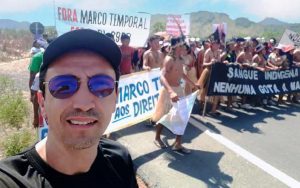
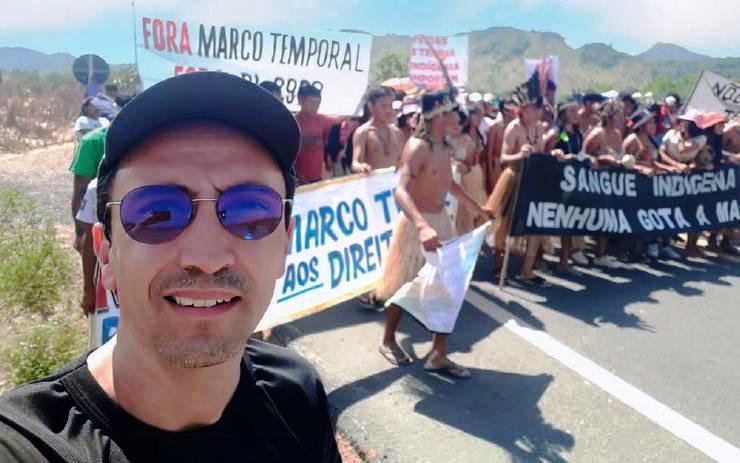
Time is not merely the chronological flow that moves inexorably forward. I learned the vital importance of the moment – the instant lived with intensity within a specific period. A simple sunset dinner shared with an indigenous family; the unified cry raised to the heavens by hundreds of indigenous people marching for their rights; the “inhabited” silence of the night across the vast savanna… These are moments when one realises that time does not always just pass; sometimes it stands still, becoming eternal – taking on an eternal quality.
Life – human existence itself – is not a value in isolation. It is the value of the lives of “all” living beings that is absolute. For this reason, my life – while certainly very important – does not hold greater value than the lives of others.
For us Westerners, this is a startling concept! For these indigenous peoples, however, the death of a companion who dedicated their life to the cause of the indigenous community holds a far deeper significance than the life of someone who lived only for themselves. Moving from “I” to “we” comes at a tremendous cost!
Words must have meaning; otherwise, they are useless. Consequently, what is most highly valued among indigenous peoples is listening. Those who know how to listen are the ones who grow most spiritually, because those who speak do so with profound words that touch the heart and soul. What a beautiful lesson: speak only when you have something relevant, meaningful, and vitally important to communicate; otherwise, remain silent and listen, for you will surely learn something from the impactful words of others.
A celebration- whether a festival or a gathering – is an occasion for honouring life, connection, and communion. What does organizing a celebration mean to us Westerners? Generally, celebrations are tied to specific dates: birthdays, academic or athletic achievements, and so on.
Another lesson I learned was to look beyond these socially prescribed moments for celebration. It is about celebrating the encounter itself: how often I arrived at someone’s home unannounced, only for a warm, fraternal, and joyful atmosphere to instantly emerge, with something to share.
Or a chance meeting on the city streets (indigenous leaders would sometimes travel to town to handle bureaucratic matters): a handshake, a hug, a joke, and the mood would immediately transform into a celebration of the moment.
The faith, spirituality, and mysticism I experienced go beyond mere religion. No, it is not really about the scrupulous observance of a set of dogmas, rituals, or rules to be learned and followed in order to be a “good Christian.” It is a harmonious and free relationship with the Other (God, the spirit, a higher being) and with others (human beings, living and non-living beings).
It is difficult to put into words. Perhaps one senses a spirituality that is less rational and less defined, yet no less demanding. An ordered and balanced relationship with all of creation requires respect and discipline, just as the defence of one’s own territories does. Although it lasted only a few years, close contact with the Macuxi and Uapixana peoples touched me deeply, contributing significantly to who I am as a man, a Christian, and a missionary.