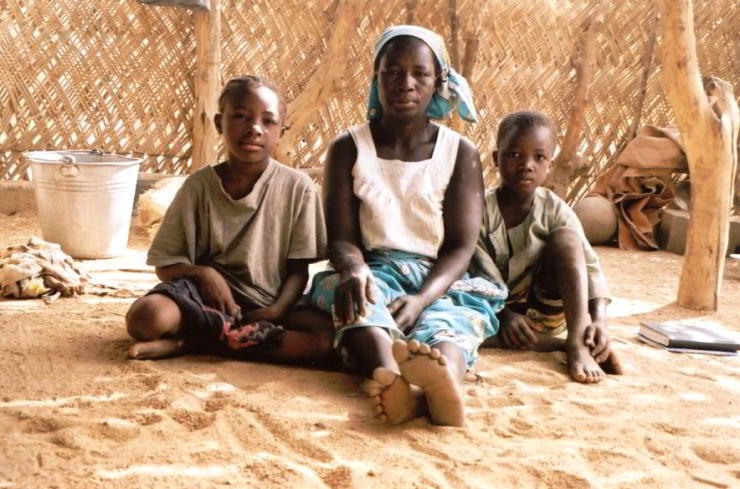
They are the largest ethnic group in Cameroon and inhabit the country’s West and Northwest Regions. Let’s explore how the Bamiléké, welcome the gift of life.
The roots of this people stretch back to 9th-century Egypt. Originally known as the Baladis, they migrated to the Tikar region of present-day Cameroon around the mid-12th century. Following the death of their last great king, Ndeh, the people divided into several groups and founded kingdoms such as Bafoussam and Bamoun.
Today, the Bamiléké are renowned for their remarkable entrepreneurial spirit and their robust social structure, which is organized into chiefdoms called chefferies. Each chefferie is led by a king known as a Fo.
For the Bamiléké people, the birth of a child is the ultimate blessing. It signifies that the family line will continue, that the family will be respected, and that wealth—not only material wealth, but also social wealth—will grow. Birth is not just a celebration, but a sacred duty involving specific rituals to ensure the protection and cultural identity of the newborn.
Tradition dictates two essential steps when a child is born through natural delivery: first, choosing a name that honours a reincarnated ancestor. It is believed that the newborn is the reincarnation of an ancestor. Therefore, the child receives the name of a grandparent or close relative from either the father’s or mother’s side. If the mother is single, the child automatically takes a name from her side of the family.
Second, there is the connection to the earth, or burying the umbilical cord. The grandmother secretly buries the umbilical cord within the family compound. This mystical act is performed in some villages by adding salt and palm oil to bless the site. Next, a celebration featuring Nkui, a traditional soup believed to help the mother produce enough milk to nourish the baby, is held.
Nature sometimes offers surprises, to which the Bamiléké respond with their deep traditions. Children Born “Feet First”: Those born in a breech position are considered special. The child and parents are given specific names: the baby becomes Tcheutchoua, the father Tatcheu, and the mother Matcheu.
Another “nature surprise” is the mystery of twins. Having twins is considered both an immense privilege and a spiritual challenge. They are considered divine beings who, if not properly “protected,” could attract negative energy. Before being introduced to the community, the twins and their parents spend two weeks in a sacred hut for a purification rite called Te Mhak or Nsi.
Honorary names are important. Twins have names like Soffo, meaning “friend of God,” or names that end infack, meaning “we are twins.” Parents also receive honorary titles: the mother becomes Magni, and the father becomes Tagni. Even a child born after twins is considered special and is named Kengne.
In conclusion, birth among the Bamiléké is a celebration of joy and spirituality. Each new arrival is welcomed not only as an individual but also as an essential part of a community with a thousand-year history. It is a fascinating world that evolves while maintaining a deep respect for its roots. (Brice Wilfrid Yanze)