A rich man, close to death, called his only son and said to him, “I leave you all my riches.” I hope you know how to use them well. Before I leave this world to join our ancestors, I want to give you three pieces of advice. First, be careful with alcoholic beverages. Second, never confide a secret to a servant. Third, never befriend a king; it is better to befriend a prince. Throughout my long life, I have learned to follow these principles. If you do the same, you will never regret it.
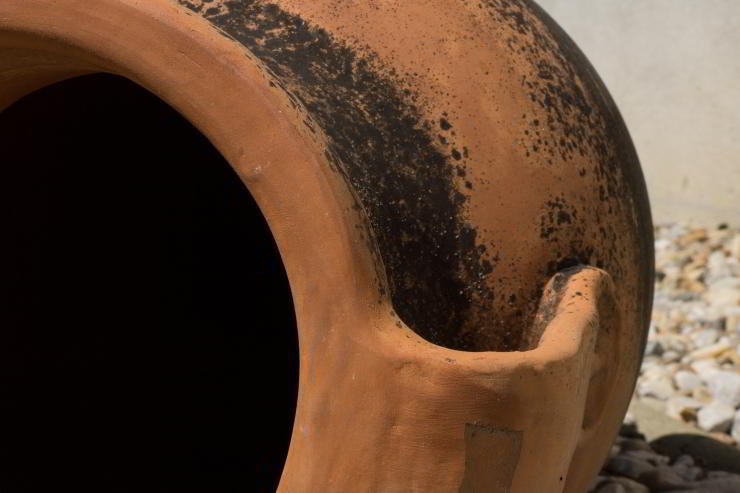
The young man, Akoli, swore to his father that he would follow these rules exactly. A few days later, his father died, leaving him with all his riches. He then said, “I will try to follow my father’s advice. But as I have a mind of my own, I will also do the opposite. In the end, we will see which is best.” He summoned the servants and ordered them, “There must always be an amphora of water and another of palm wine in my room”.
He began frequenting the king’s house with ease, as the doors of the wealthy are easily opened to the rich. He became friends with Aru, the young prince. Gradually, the king’s house became his home. He came and went as he pleased, playing with the prince and organising long hunting trips with him to the mountains that could be seen from the royal palace terrace.
The king often called on him to accompany him and talk with him. Akoli was happy. His father’s advice had been wrong: with his ingenuity, he was able to befriend the king and the prince. He drank copiously from the palm wine amphora. The king always had a cheetah by his side that he had found in a thicket during a hunting trip. He had brought it to the palace and raised it with great care.
“Woe betide anyone who touches this animal,” he said. “Anyone who dares to steal it or harm it, even if it is my son, will be hanged.” The beast, with its phosphorescent eyes and beautiful skin, had grown fond of the king, spending its days curled up motionless at his feet.
One day, a strange idea crossed Akoli’s mind. Perhaps he found it in the wine amphora. In any case, he was so fascinated by it that he ran to tell the prince right away. “In three days, the festival of the first moon of the year will begin. How about we play a joke on your father, the king?” “What joke?” asked Aru. “We’ll steal the cheetah and hide it for the duration of the festivities.”
The idea was risky, but the prince liked it. It wasn’t difficult to steal the cheetah as it knew them and had played with them many times before. While the king slept, they lured it with wild honey, which it loved, and, aided by the darkness, they took it to Akoli’s house.
The coup went splendidly, and the two friends drank all the wine from the amphora. Then Akoli called his most faithful servant and said: “Keep this cheetah for me until the Moon Festival is over. Woe betides you if you say a word, for my life depends on it.”
With that, he went to sleep. Before the roosters had begun to crow, the whole village was awoken by the voice of the king’s town crier shouting: “Attention! The sovereign’s cheetah has been stolen! His Majesty declares that he will show no mercy to either the thief or the person keeping the animal. One hundred gold coins will be given to anyone who reveals the thief’s name. The King has spoken!”
An earthquake could not have terrified the villagers more. As soon as the sun rose, Akoli went to the palace. Feigning great pain, he said to the king, “I have heard that your cheetah has been stolen. Who would have dared to commit such a crime?”
The prince also went to see his father to tell him how saddened he was by the news. A little later, the friends met outside the village under an acacia tree and burst out laughing – the joke had worked and no one suspected them. The faithful servant had also heard the town crier’s announcement before dawn, and a terrible fear seized him.
He had no desire to be hanged over an animal, and besides, the hundred gold coins would be very useful to him. However, he had sworn allegiance to his master and the idea of betraying him was as horrible as death itself. He decided to discuss it with his wife. She was terrified and did not let him finish, instead saying, “Go immediately to see the king and tell him everything you know.”
He told the guard at the royal palace gate that he had important and secret information for the king and was granted an audience with the sovereign. “Your Majesty, I know where the cheetah is.” He recounted the details of the incident, but without naming the prince. The king ordered that he be given a hundred gold coins and commanded the guards to follow him and arrest Akoli immediately. “Prepare a strong rope to hang him,” he added.
Akoli was arrested when he returned from a walk with the prince. “Why are you doing this?” he asked the guards. The commander pointed to the rope already hanging from the tree in the village square in response. Akoli realised that the servant had betrayed him and began to cry. The prince intervened, saying, “I took part in this enterprise too. So, you must arrest me and hang me with him.”
The guards tied him up. The king was already at his post, surrounded by the elders, ready to witness the execution. Imagine his surprise when he saw that there were two condemned men, one of whom was his son! The commander explained what had happened. “Wretch! Did you also want to challenge my wrath?” The prince replied, “Father, we meant no harm; it was just a joke. But if Akoli must die, then I should suffer the same fate because we committed the crime together.”
The king realised that what had happened was nothing more than youthful bravado and did not deserve to be punished with death. He ordered the guards to untie them and set them free. At that moment, Akoli remembered his father’s advice and realised it was sound. (Folktales from Asia) – (Photo: Pixabay)