Africa is home to many important medicinal plants. One such plant is Aerva lanata, which has been used for many medical conditions since time immemorial.
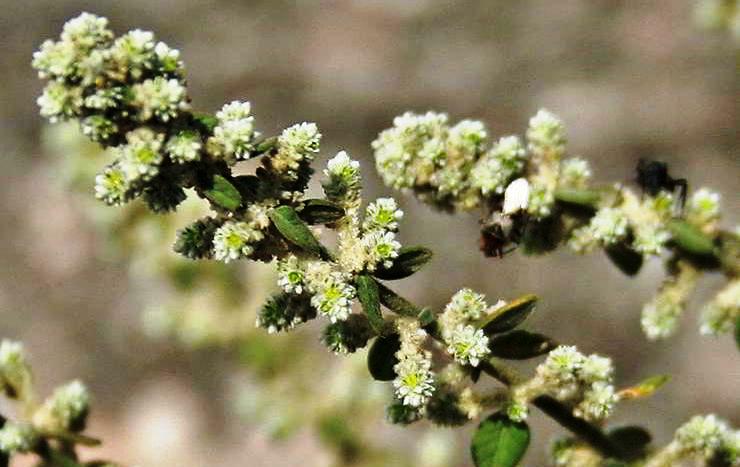
This strangling herb or undershrub can grow to a height of 90 cm. It has a hairy stem, a long taproot and many woolly branches. The leaves are ovate to elliptic, with pointed tips and hair-like stems. The inflorescence is white, short and small, mostly axillary, and the perianth is covered with white woolly hairs. The plant grows in loose soil and abandoned farmland, and is widespread in tropical Africa.
Aerva lanata has a long history of use in traditional medicine as a therapeutic agent for various diseases. Its leaves, stems and roots have been used to treat inflammation, malaria, kidney stones, pneumonia, typhoid, rheumatism, bronchitis, haemorrhages, jaundice and diabetes. They have also been used as a diuretic and vermifuge. A decoction of the leaves is used to treat intestinal worms.
The leaf infusion or decoction is used as a gargle to treat sore throats and is also used in various complex treatments against guinea worm. The leaf decoction is also used to bathe babies who have lost consciousness due to malaria or other diseases. In some communities, inhaling the smoke from burning plant leaves is believed to heal several diseases. The sap obtained from fresh Aerva lanata leaves is used to treat eye conditions. An infusion made from fresh leaves is administered orally to treat diarrhoea, and is also applied topically to treat skin sores.
In Africa, the decoction made from the leaves of Aerva lanata is used in traditional medicine to treat diabetes mellitus and its associated complications. In fact, the leaf decoction is believed to effectively regulate blood sugar levels in the body.
It is also used to treat gonorrhoea, haemorrhages and fever. A decoction made from fresh leaves is often consumed as a tea to improve memory.
A decoction obtained from the whole plant (including the flowers, roots and stems) is used to treat diarrhoea and can also be consumed as a tea to cleanse the kidneys and treat kidney stones. Additionally, the diuretic properties of the Aerva lanata root make it useful for treating painful urination. Similar to the leaf decoction, the root decoction can be used for gargling to treat sore throats.
The root is believed to possess anti-venom properties and is used by herbalists to treat snakebites. Ash from a mixture of leaves and flowers is applied to an incision on the back to treat lower back pain.
The juvenile tips of the plant are used for good luck charms and to chase away evil spirits, while the whole plant is used to treat pruritus. It is also used in traditional medicine to treat coughs, headaches and urolithiasis. The root has demulcent and diuretic properties and is useful in treating strangury (a blockage at the base of the bladder).
As a demulcent, Aerva lanata protects the mucous lining during coughs and throat infections, thereby preventing inflammation. The juice obtained from crushed roots is used to treat jaundice. In some communities, the plant is also used to treat and manage asthma.
The Aerva lanata plant contains several compounds, including kaempferol, tiliroside, β-sitosterol, aervoside, syringic acid and canthin-6-one. The medicinal properties of this plant may therefore be attributed to its rich content of phytochemicals.
Aerva lanata is also used as food for people and animals. The entire plant, particularly the leaves, is edible. The leaves can be added to soups or eaten as spinach or a vegetable. The plant also provides feed for domestic animals. (Richard Komakech) – (Open Photo: CC BY-SA 4.0/J.M.Garg)