In traditional African culture, eating a meal encompasses more than just food; it is a vital part of cultural practices, complete with its own rites and values.
African people follow strict rules about their meals, and these occasions are often surrounded by taboos, especially those held within families or during significant celebrations. These are indeed rituals in the true sense of the word: ‘rite’ originates from the Sanskrit ‘rita’, meaning ‘order’.
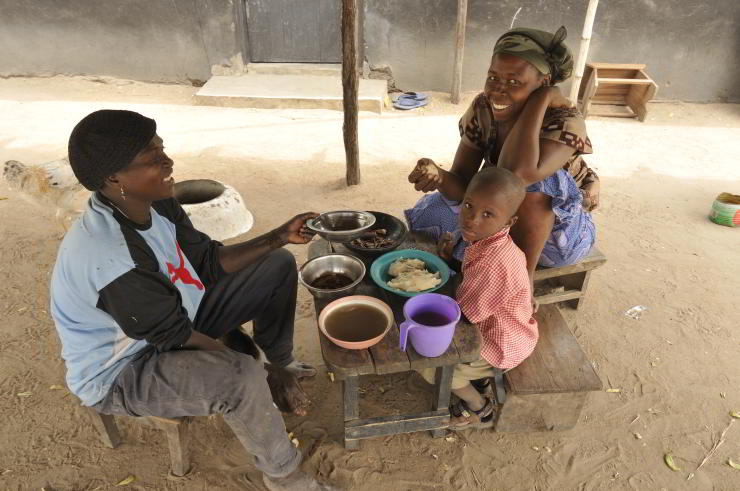
When a family gathers to eat together, each individual embodies a set of values linked to the food.
The mother who prepares the meal represents her family, clan, and community. She appears beautiful, clean, and respectable; she is obedient to her husband and his family; diligent and productive; capable of providing for her loved ones. She is also hospitable, courteous, and kind. Moreover, she educates her children and teaches them proper manners.
Anyone who eats her cooked food demonstrates appreciation for these values, which in turn strengthens their spirit by symbolically consuming them. The man for whom the mother has ‘come to cook’ (in some African languages, marriage is described as ‘cooking’) represents his people, his clan, and the qualities cherished by Africans, such as courage, authority, strength, wealth, hard work, and the ability to defend and support his family. All these virtues are reflected in the food shared and enjoyed. Those participating in the meal appreciate and embody these values.
Children assisting their mother by fetching water, collecting firewood, or performing other necessary tasks showcase obedience, diligence, good manners, attentiveness, and a willingness to learn. This is reinforced by the fact that children are typically not permitted to speak during meals. If a guest is present at the table, they represent the outside world, and the family must demonstrate its worth to them. Any misbehaviour could tarnish the family’s reputation. No one wishes to visit or marry into a family that does not observe proper table manners. The wise Acholi from Uganda saying ‘Wang welo bit’ (The eyes of a visitor are sharp) reflects this.
Hospitality is a core value in African cultures. When a guest shares a family meal, it signifies their recognition of these values and their commitment to supporting the family’s well-being, through good times and bad.
This explains why Africans are offended if their food is refused. Such a refusal is seen as rejecting their hospitality and brotherhood, as well as everything that the food signifies. Sometimes, it is interpreted as contempt for the family that prepared it. A shared meal is so significant that, if a husband and wife disagree, one may refuse to eat. Children who misbehave may be excluded from meals as a form of discipline. Sharing a meal without full unity can appear hypocritical.
The funeral meal holds particular importance. It is the deceased who, with the support of their family, village, and clan, brings everyone together for this occasion. Participating in this meal symbolises unity with the departed and their community. To refuse to help prepare this meal or to decline eating it is a grave matter for relatives of the deceased or anyone present.
Washing hands before eating is a must, not only for hygiene but also as a symbolic act of purification.
Even if hands look clean, they must be washed because the ritual cleanses the heart, represented by the hands. We should eat with clean hands and a pure heart, free from ill feelings towards anyone at the table. (Edward Kanyike)