Having come to the world’s attention, Greenland has asserted its autonomy and independence. There is a small but growing Catholic community in the country.
US President Donald Trump has repeatedly expressed interest in “buying Greenland.” Greenlandic Prime Minister Mute Egede has responded firmly: “We are not for sale, and we never will be.” The country of sun and ice is now the centre of global attention. But why is Greenland of such interest to Washington, Moscow, and Beijing?
Greenland, the largest island in the world, rises from the icy waters of the North Atlantic Ocean, straddling North America, Europe, and Russia. Its strategic position is significant from a military and commercial standpoint, being a crossroads for new trade routes in the Arctic.
The Northeast Passage is of particular interest to China, as it would allow it to shorten the route to Europe by approximately 10,000 kilometres, saving an estimated $60 to $120 billion annually. Vladimir Putin’s Russia plans huge investments in maritime infrastructure along the Northern Sea Route.
For reasons similar to China’s, India also wants a greater role in the Arctic Council, where eight countries (the United States, Russia, Canada, Norway, Denmark, Sweden, Iceland, and Finland) govern the polar region. Another aspect that makes the Great Polar Game particularly intense is the richness of its subsoil.
Greenland is part of the Laurentian Shield, a vast plateau that extends across half of Canada to the Arctic Ocean, one of the oldest rock formations on Earth, even preserving remnants of the primordial crust. The type of its interior is therefore rather more unique than rare. It is characterised not only by hydrocarbon deposits, such as gas, oil, and coal, but also by precious metals, such as gold and silver, as well as uranium, copper, molybdenum, diamonds, cryolite, lead, and zinc.
The deposits have remained buried under ice sheets for centuries, but today they continue to diminish. Exploration over the last twenty years has led to the discovery of rare earth elements used in technology. This is the “treasure” everyone wants.
Nuuk, with its twenty thousand inhabitants, is the capital of Greenland. It is home to the island’s only Catholic church, dedicated to Christ the King. It is under the jurisdiction of the Catholic Diocese of Copenhagen. Father Tomaž Majcen, a fifty-year-old Slovenian Conventual Franciscan, is the parish priest, along with a community of three friars.
He arrived in the summer of 2023. He says: “I was already regularly visiting Nuuk, having set foot there for the first time in 2018. Greenland means ‘green country’, but that’s only the name; in reality, it’s a country covered in ice and rarely visited. From the very beginning, this land has been a place of grace and peace for me, a place where I can rest my body and soul. It allows me to reflect deeply on my spiritual life.”
When did the Catholic presence in Greenland begin? “The Gospel first arrived in the Middle Ages: the diocese of Garðar was established in 1126. There were then ups and downs from an ecclesiastical perspective. The current parish of Nuuk was established in 1958, and the church was consecrated in 1972.
Before the arrival of the Franciscans, the parish of Nuuk was entrusted to the priests of the Institute of the Incarnate Word. Even earlier, starting in 1980, the nuns of the Fraternity of the Little Sisters of Jesus (Jesu Små Søstres Kommunitet / Jiisusip Najaarai) also worked in the Nuuk mission.
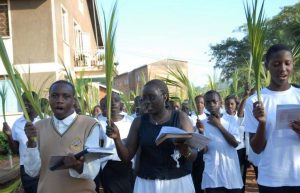
How many Catholics are there today? “In Nuuk, there are about three hundred, but I believe there are also about five hundred in other centres. These are small groups that don’t have their own church. One example of this is Ilulissat. Every now and then, a priest makes the two-hour flight from Nuuk to go there. On that occasion, the faithful gather at the home of one of them, an experience similar to that of the early Christians. Most of them come from the Philippines, Poland, and other European and Latin American countries. As for the Inuit, the Kalaallisut-speaking population, most are Lutheran, but there are also some Catholics.”
How do you carry out your pastoral work? “I serve two parishes: one in Copenhagen and the other in Nuuk. When I’m not in Greenland, I rely on the help of some Danish priests to ensure Mass is celebrated every Sunday. When no priest is present, the Nuuk community still gathers in church.” Father Tomaž recalls that last year there were seven baptisms, one adult confirmation, and ten children made their First Communion.
Regarding life in Nuuk, the friar says: “The atmosphere is characterised by a strong sense of community. Social bonds are highly valued, and traditional Inuit values emphasise cooperation and mutual support. Many people participate in cultural events, sports clubs, and community activities. Winters are long and dark, which can encourage isolation, but music events, local gatherings, and a vibrant café culture help people stay connected. Nuuk also boasts a growing arts and culinary scene, and outdoor activities like skiing, hiking, and kayaking offer opportunities to socialise. While the community spirit is strong, some, especially newcomers, may feel isolated at first.”
“The extreme climate, long winter nights, and relatively high cost of living can also pose challenges. It’s important to remember, however, that rates of alcoholism, domestic violence, and suicide are high, partly due to historical trauma and rapid social change. However, those who embrace the Nuuk way of life can find a rewarding balance between nature, tradition, and modernity.”
From an economic perspective, Father Tomaž says: “The economy is heavily dependent on fishing and seafood. The most important sector is exports, especially shrimp and halibut, but many work in the public sector, particularly in healthcare and education. Greenland receives an annual grant from Denmark of four billion Danish kroner to support public services. Nuuk and its larger towns have an acceptable quality of life, but many smaller communities struggle with poverty, unemployment, and a lack of opportunities. Nuuk faces a housing crisis, with overcrowding and long waiting lists for apartments. Everything from food to electricity is expensive, because most goods are imported.”
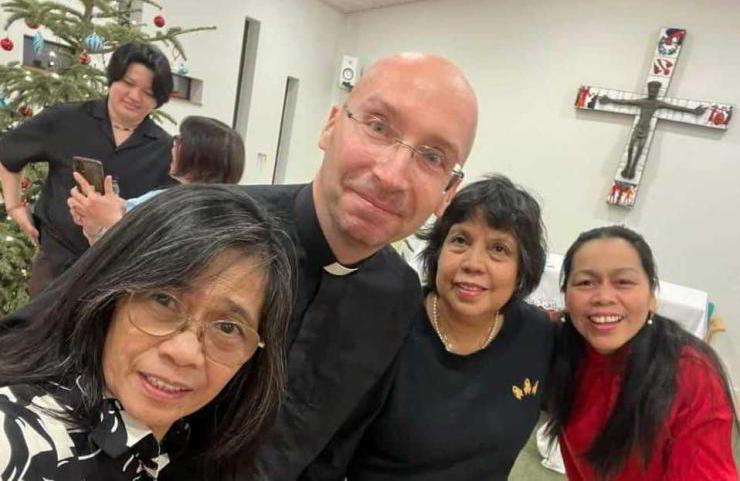
Looking to the future of the Catholic community in Greenland, Father Tomaž says: “Although it is small, it is growing and deeply devout.” (A.N/A.G. – AV) – (Photo: Father Tomaž Majcen with Filipino members of the community/Facebook)