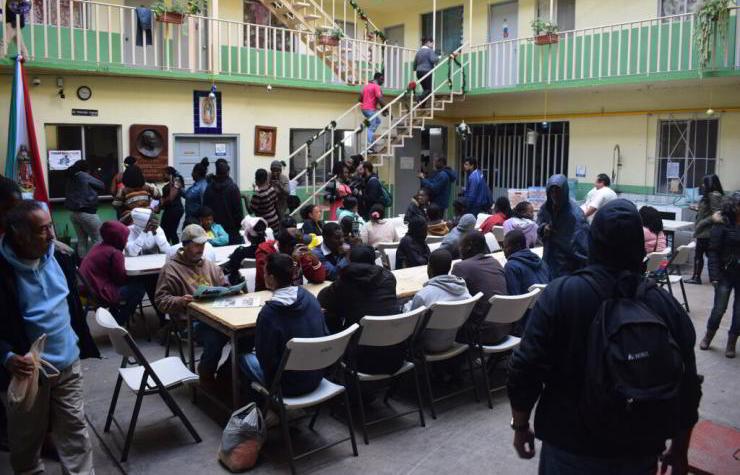
‘During its 38 years of operation, Casa del Migrante has welcomed more than 270,000 people through its doors,’ said Fr. Pat Murphy, who stepped down in September after 12 years as director of the Scalabrini Centre, the oldest migrant assistance facility on the Tijuana border.
This year, the House of the Migrants has celebrated 38 years of service. During those 38 years, we have faced many challenges: from being a house of hospitality that provides only for deported men, to being a home that welcomes all families.
We survived the 2020 pandemic which forced us to re-evaluate the way in which we do things. We transitioned from being a small team of seven people to a rather robust team of 23, working in unison for the good of the migrants whom we are called to serve. We are now almost one year into the new Trump administration and some alarming events have happened which have brought even greater challenges to the life at the border in general, as well as to life at the Casa del Migrante.
The current situation can be summarised under three headings: massive deportations, massive financial cuts and massive military presence.
One of the promises of Donald Trump’s campaign was to deport millions of people. Up to now less than 150 000 have been deported. The main problem in implementing this decision has been the lack of infrastructure; so, Guantanamo Bay Naval Base has been identified as a place to house undocumented immigrants, and plans to re-open the notorious Rikers Island Jail in New York have been made to create another facility to accommodate immigrants.
In Tijuana we have not yet to date experienced “Massive Deportations”, but as the Trump administration ramps up its infrastructure, we are sure to be inundated with large numbers of immigrants. We should also mention that the entire asylum process has been abandoned, and people no longer have any legitimate and legal means to seek entry into the USA.
The most recent development is that of facing the consequences of the planned goal of 3000 deportations daily, established by the US immigration agents who have begun to carry this mission out in SWAT style raids on the homes, places of work and even schools. It is not an exaggeration to say that they will soon be carrying out raids on places of worship.
Some people have even been wrongly detained and deported to other countries. I wonder where people will find hope. The concept of hope has been and will continue to be a major theme in the life at the Casa.
Another aspect of this new USA administration is that there have been massive financial cuts in foreign aid; these cuts have affected all our Casa in significant ways. Many international organisations like ACHNUR, International Organisation for Migration (OIM), UNICEF and the Catholic Relief Service (CRS) have seen their donations frozen indefinitely.
We, in turn, have been told that a large percentage of financial aid to Casa has also been frozen. For example, about 10-15% of our budget comes from ACHNUR and consequently, we now need to seek new funding. Programmes for children financed by UNICEF have also been frozen and groups that have been coming to Casa to offer programs for children have dried up.
The good news is that many generous people have turned up with donations, but our big challenge remains in finding new funding. At the border, there is an enormous military presence on both sides. The USA and Mexico have each sent 10,000 troops to patrol the entire border. This heavy military presence is no doubt affecting the lives of many people in a very negative way.
As I reflect on almost one year of the Trump Administration, I am filled with a deep sense of sadness and genuine preoccupation with the future of the migrants who are attempting to escape poverty and violence, trying to start a new life. The response of the Mexican Government has been dismal. For example, in Tijuana there has been zero dialogue on ways to handle this crisis at the border.
The municipal government has opened a shelter in the city for about 2,000 deportees. When they arrive, they are accommodated there for two days and then offered a free bus ride back to their places of origin or told to find a place in another shelter in the city. At this point, fewer than 3,000 people have been sheltered at the famous Flamingo Shelter. It seems the government of Mexico will continue to waste huge amounts of money on white elephants like the Flamingo, offering no help to any of the shelters along the border.
So, the question remains: what we, as Scalabrinian missionaries, can do here at the border. Some challenge that might be considered is the challenge to share the truth about what is happening. We have been doing this in many different forums. The truth must be told. The challenge to help Tijuana continue being a strategic venue for migrants.
I am convinced that with our 38 years of experience, we are in a unique position to offer hope to many migrants. The financial challenge of keeping our doors open at the Casa is very real. We will need to seek alternative funding sources and knock on many more doors to attempt to confront this financial crisis.
However, I remain convinced that we will thrive and survive. We must do this for the sake of the migrants, refugees and displaced people who knock at our doors daily. (Photo: Courtesy: CMT)