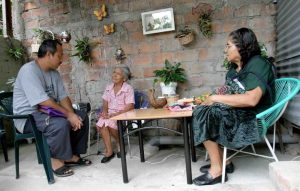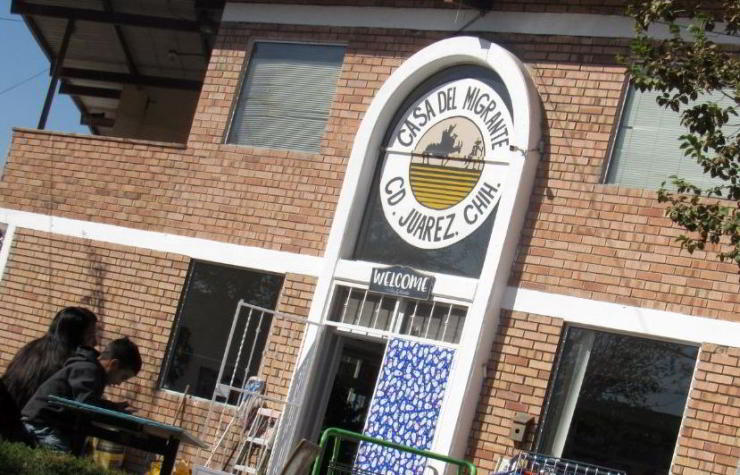
‘La Casa del Migrante’ in Ciudad Juárez provides food, medical care, and psychological, legal and spiritual support.
The distance from Ciudad Juárez to El Paso is short – just over twenty kilometres – but it is now nearly impossible to cross if you want to leave the Mexican city behind, enter the US, and pursue the American dream. Since the Trump administration ordered a crackdown on migrants fleeing war, poverty, and persecution to build a better life, that section of the US-Mexico border has become one of the world’s most heavily fortified areas.
It’s not just walls, cameras, electronic sensors, and exhaustive controls – there are also hundreds of police officers whose job it is to deter men, women, children, and even entire families who have left their countries in the hope of obtaining a visa to happiness, a hope that has become a chimaera. Thousands of them are in Ciudad Juárez, and their numbers are growing exponentially daily.
This large, multi-ethnic urban area in the Mexican state of Chihuahua has a massive population currently awaiting the right moment to move to the US or for a political asylum process to open.
Where do they come from? “Mostly Mexico, Venezuela, Honduras, Nicaragua, Colombia, Guatemala, Ecuador, and Vietnam. While they wait to move on, they live here and do all sorts of menial tasks, mainly cleaning and maintenance,” explains Father Francisco Javier Bueno Guillén.
Father Francisco, a Scalabrinian missionary, is the director of the Casa del Migrante in Juárez, which provides migrants with food, medical care, and psychological and spiritual support.
Migrants arrive on foot, by plane, by car, by wagon, and even aboard the infamous ‘Beast’ – the freight train running northward across Mexico. They climb onto the roofs of the wagons to get as close to the US border as possible. Mexicans call it the ‘Beast’ because dozens of people often lose their lives on this hellish journey.
People flee their homelands for various reasons – lack of employment and educational opportunities, threats, or human rights violations. Fr. Francisco states that they all believe they will find the economic, health, and educational opportunities they lack in North America.
The missionary will never forget the despair, helplessness, and sadness of a large Venezuelan family that had been waiting months for a government appointment to discuss their asylum claim, submitted via the CBP One mobile application.
When the Trump administration suspended this digital tool, their world fell apart. “The family is stuck in our Migrant House and will hardly be able to leave Mexico because they cannot afford the flight tickets and all flights to Venezuela have been cancelled for now,” he explains.
Within the Migrant House, many stories of suffering and despair can be heard. Many migrants opt to settle permanently in Mexico after being denied legal entry to the US. Many others stay there while waiting to try again, possibly even illegally.
In Ciudad Juárez, they are no longer counted; indeed, the local church has established an extensive aid system: ‘We provide them with food, clothes, medicine, as well as spiritual and psychological support to help them discover their goals and needs. We also assist with some legal procedures.”
Father Francisco expresses concern that these people fear raids and deportations that could separate their families forever. While each government has the right to control its borders, it must be recognised that every migrant is a person with rights and responsibilities seeking a better life. (Federico Piana) – (Photo: Courtesy: CMJRZ)